
By the start of 2022, Meta looked untouchable. The company that had renamed itself just months earlier was worth more than a trillion dollars at its peak, its family of apps reaching billions of people every day. Then, on February 3, 2022, the floor gave way.
Reporting fourth-quarter results the day before, Meta revealed something it had never disclosed in its history: Facebook's daily active users had actually shrunk quarter over quarter. Pair that with Apple's App Tracking Transparency changes gutting ad targeting, TikTok siphoning off younger users, and a jaw-dropping spend on the metaverse, and investors panicked. The stock cratered roughly 26% in a single session, erasing about $232 billion in market value — at the time, the largest one-day loss in U.S. corporate history.
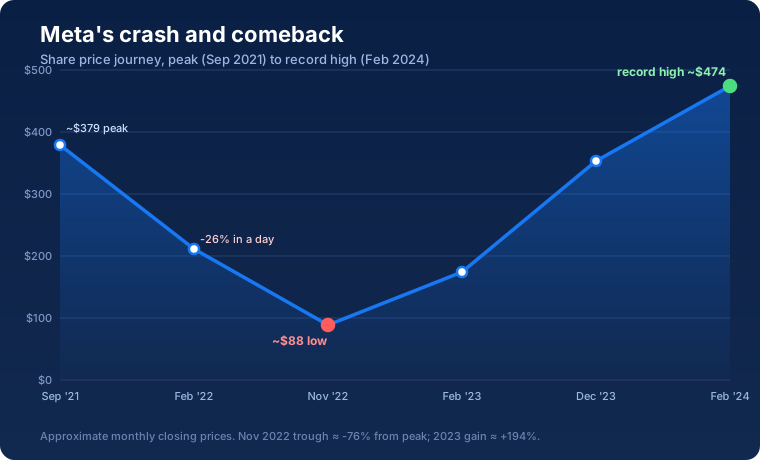
The long slide of 2022
That single day was only the beginning. Across 2022, Meta's shares fell roughly 64%, sinking from over $300 to a November low near $88 — a drop of about three-quarters from the 2021 peak. The market's verdict was blunt: it did not believe in the metaverse bet.
The numbers behind that skepticism were real. Reality Labs, the division building Zuckerberg's virtual-world ambitions, posted an operating loss of roughly $13.7 billion for 2022 alone, with leadership signaling losses would only grow. Meanwhile, the core advertising engine — the thing that actually paid the bills — was under pressure for the first time in years. For a company that had known almost nothing but growth, it was a genuine crisis of confidence.
Layoffs and the "Year of Efficiency"
Zuckerberg's response marked a sharp turn in tone. On November 9, 2022, Meta announced its first mass layoffs ever: about 11,000 employees, roughly 13% of the workforce. "I got this wrong, and I take responsibility for that," Zuckerberg told staff, acknowledging he had over-hired during the pandemic boom expecting the surge to last.
Then came the phrase that would define the year. On the February 1, 2023 earnings call, Zuckerberg declared that Meta's management theme for 2023 would be the "Year of Efficiency" — flattening the org chart, killing marginal projects, and asking every team to do more with less. He doubled down in March 2023, announcing a second round of roughly 10,000 cuts plus about 5,000 open roles that would go unfilled. In total, Meta shed tens of thousands of positions in a matter of months.
The comeback
What happened next surprised almost everyone. Leaner and newly disciplined, Meta's profits surged even as it kept investing heavily in AI infrastructure. The stock became one of the best performers on the entire market in 2023, climbing roughly 194% for the year — a near-vertical recovery from the November 2022 bottom.
The exclamation point came on February 1, 2024. Reporting record annual profit, Meta announced its first-ever dividend and a $50 billion share buyback. The next day the stock leapt about 20%, adding on the order of $196 billion in market value in a single session — the largest one-day market-cap gain in U.S. history to that point, and a near-mirror image of the collapse two years earlier. The metaverse bet remained unproven, but Wall Street had decided efficiency plus a booming AI story was a company worth believing in again.
Next: the final chapter — where Meta stands today, and what the next era of the company might look like.
Comments
Post a Comment